In most recruitment some effort is put to understand if people have taken on lead roles also outside their professional work. Here I think about activities like scouting, sports teams, musical orchestras, politics, student organizations and similar.
Until I attended the LINK event this year I often asked myself: Intuitively and from past cases it makes sense, but why? Where is the proof point? Is there any link to current leadership or people management thinking?
Then, during the presentation ’’Driving Breakthrough Performance in the New Environment” by Adriana Duque Hughes I realized CEB has stumbled across a great insight that at least de facto proves the value in extracurricular activities.
Let’s start by thinking through what extra curricular activities involve:
- Typically you deal with different set of people from the usual ones and you can rarely choose them yourself
- Typically you need to influence people without authority over their paycheck or other status indicators
- Typically the result of your efforts will only be seen if other people approve of them
In short, for you to succeed in extra curricular activities you will have to get results by inspiring and motivating people often without a formally appointed leadership role, at the same time you have to get things done for the inspiration to last.
Now let’s look at the CEB 2012 High Performance Survey of 23,339 employees from member companies:
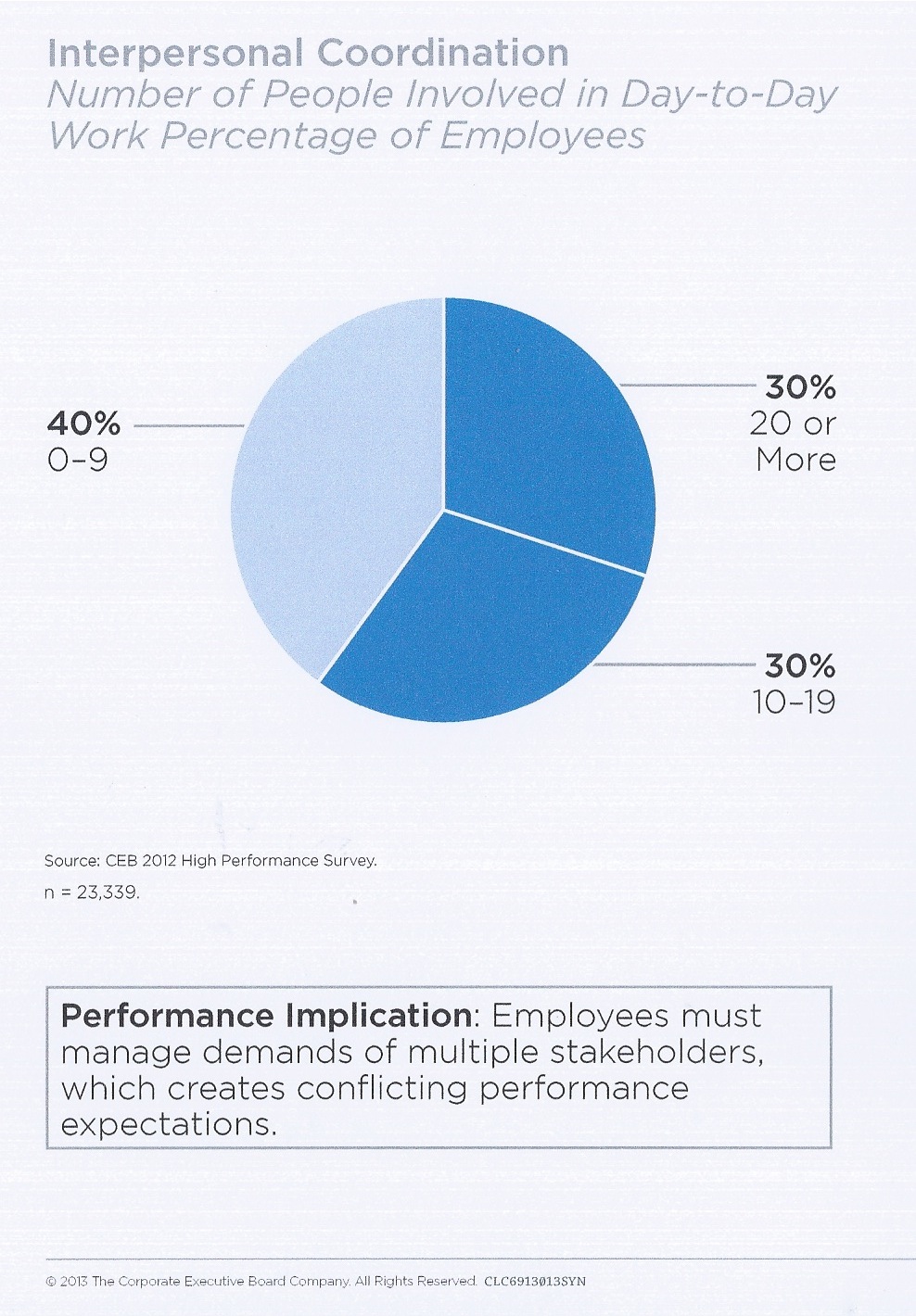
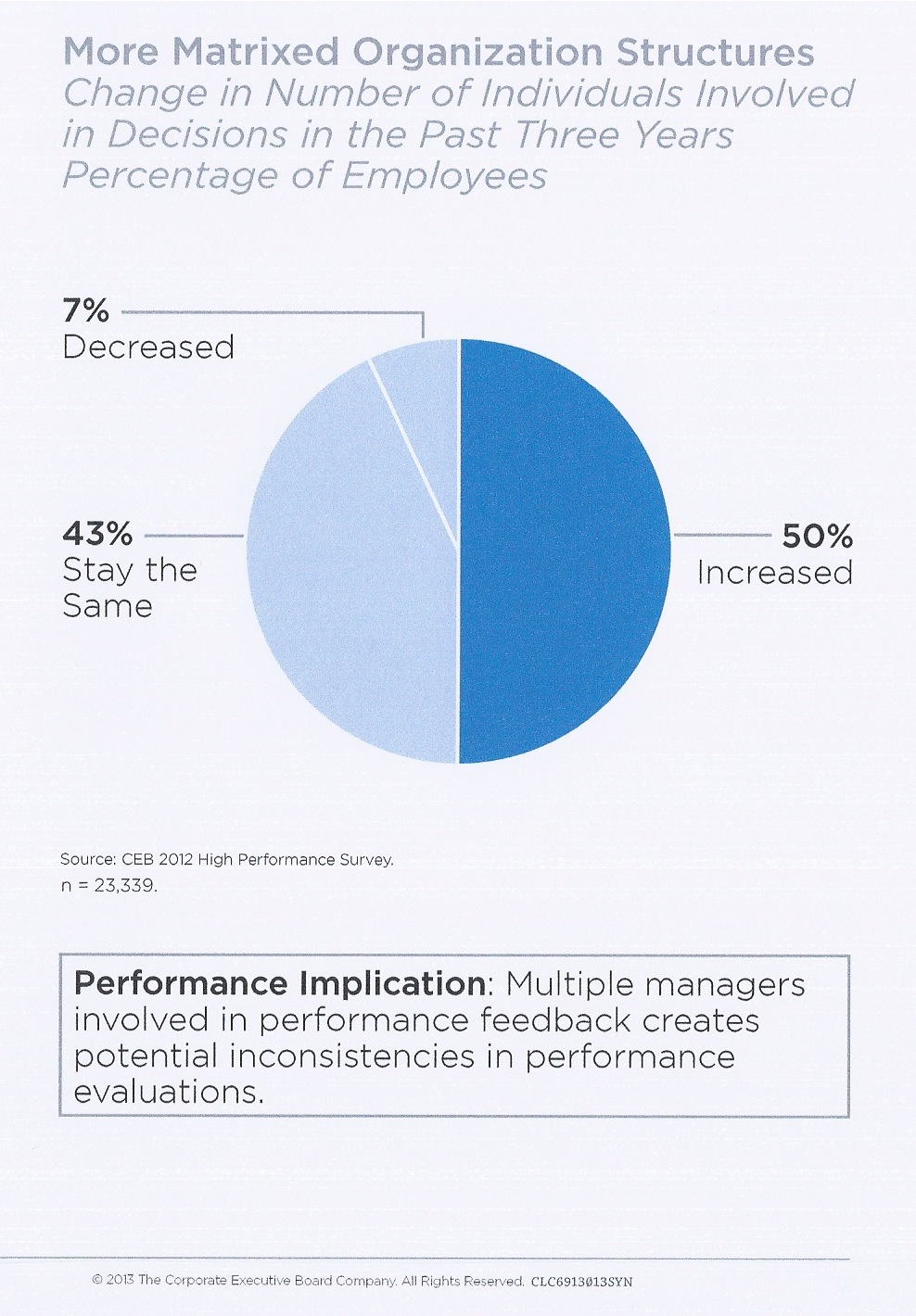
30% of the people say they deal with at least
20 other people for their Day-to-Day operations
and
50% of the people say number of people involved in decision making has increased since 2009
So the environment is more Networked than before in many ways.
When were asked to evaluate the performance of people in an Individual Task dimension and a Network Task dimension the following results emerged:

57% of the employees get rated as Effective or Very Effective on the Individual Task Performance, yet only 20% of the employees get rated as Effective or Very Effective in Networking with others.
Lets simplify this picture by focusing first on only a part of it: those that perform High in Network Performance. Of those that get an Effective or Very Effective rating on Network Performance 17 out of 20 will perform their Individual Tasks to Effective or Very Effective Performance. This means if you isolate the observation to only these people you will get only 3 of the 20 that score Average or Poor on Individual Task Performance.
In other words, if used in recruitment: if you select a high Network Performer you are 6 times as likely to get a person that performs his/her Individual Tasks well than not.
When you look at the people that are not ranked high on Network Performance the odds of finding a High Performer on Individual Tasks drops to 40 of 80 or 1 out of 2. If the person Scores average or poor on Network Performance the odds of recruiting a High Individual Performer is a good as tossing a coin (1 out of 2).
Now, to combine the two lines of thought:
To be successful in business you have to be able to deal with people you didn’t choose.
A person that succeeds in extra curricular work has shows him/herself able to create performance in a Network. Because you learn these skills in extracurricular work it matters in recruiting.